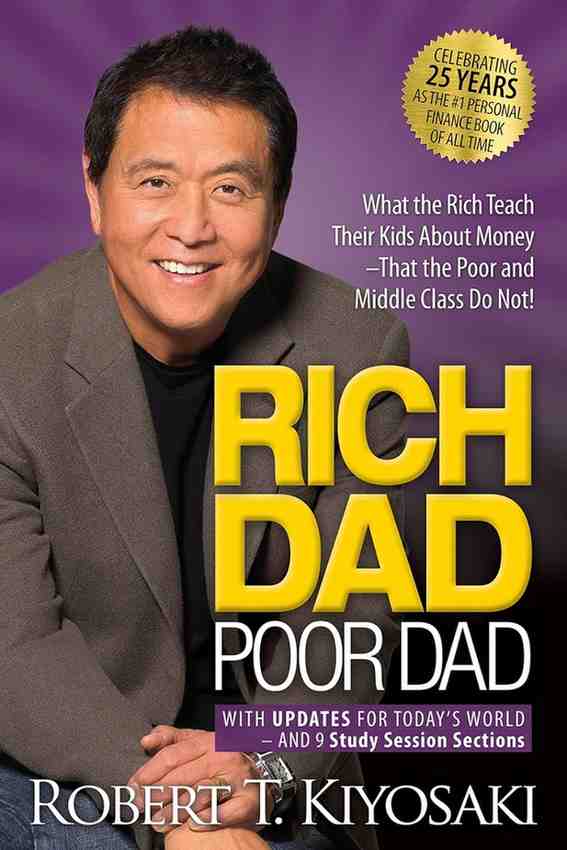
Robert Kiyosaki’s Rich Dad Poor Dad is a timeless guide on how to create wealth and develop a rich mindset. By contrasting the financial philosophies of his two father figures—his “Poor Dad” (his biological father) and his “Rich Dad” (his best friend’s father)—Kiyosaki shares powerful insights on escaping the rat race, mastering money, and achieving financial freedom. Here’s a breakdown of the book’s core lessons, including the famous Cashflow Quadrant, to help you understand how to get rich.
1. The Rich Mindset: Think Differently About Money
The foundation of building wealth lies in adopting a rich mindset. Kiyosaki’s “Poor Dad” believed in traditional paths like getting a good education, working a stable job, and saving money. In contrast, his “Rich Dad” focused on financial education, investing, and creating opportunities. The key takeaway? To get rich, you must shift your thinking from “I can’t afford it” to “How can I afford it?” This mindset encourages creativity, problem-solving, and a focus on long-term wealth-building.
2. How to Create Wealth: Assets vs. Liabilities
A central theme in Rich Dad Poor Dad is understanding the difference between assets and liabilities. Kiyosaki defines assets as things that put money in your pocket (e.g., real estate, stocks, businesses) and liabilities as things that take money out (e.g., mortgages, car loans, credit card debt). To create wealth, you must focus on acquiring assets that generate passive income, rather than accumulating liabilities that drain your resources. This simple yet powerful concept is the cornerstone of financial independence.
3. The Cashflow Quadrant: How Money Works
Kiyosaki introduces the Cashflow Quadrant to explain how people earn money. The quadrant is divided into four categories:
- E (Employee): Works for someone else and trades time for money.
- S (Self-Employed): Owns their job and relies on their own efforts.
- B (Business Owner): Owns a system that generates income.
- I (Investor): Makes money work for them through investments.
The goal is to move from the left side of the quadrant (E and S) to the right side (B and I), where true wealth is created. By building businesses and investing in assets, you can achieve financial freedom and escape the limitations of trading time for money.
4. Work to Learn, Not Just to Earn
Kiyosaki emphasizes that the path to wealth isn’t just about earning a paycheck. Instead, focus on gaining skills that will help you build and manage assets. Whether it’s learning sales, marketing, or leadership, these skills are essential for entrepreneurship and investing. A rich mindset values knowledge and experience over short-term income.
5. Make Money Work for You
The ultimate goal of financial education is to make money work for you, rather than working for money. This means building passive income streams through investments, businesses, and assets. By doing so, you can achieve financial independence and break free from the cycle of living paycheck to paycheck.
Why This Matters: Your Path to Wealth
Rich Dad Poor Dad isn’t just a book—it’s a blueprint for transforming your financial life. By adopting a rich mindset, understanding the Cashflow Quadrant, and focusing on how to create wealth, you can take control of your financial future. Whether you’re an employee, self-employed, or aspiring entrepreneur, the lessons in this book provide a roadmap for escaping the rat race and building lasting wealth.
In the end, getting rich isn’t about luck or hard work alone—it’s about making smart choices, continuously learning, and taking action. Start today by shifting your mindset and taking the first step toward financial freedom.