Private U.S. Spaceship Lands Near Moon’s South Pole in Awkward but Historic Feat
In a moment that can only be described as equal parts groundbreaking and slightly clumsy, a privately-funded U.S. spacecraft has successfully landed near the Moon’s south pole. While the landing was not without its awkward moments, the mission represents a significant milestone in space exploration, proving that private companies can not only reach the Moon but also navigate its challenging terrain—albeit with a few hiccups.
The spacecraft, developed by a U.S.-based aerospace company, touched down in the rugged and shadowy region of the Moon’s south pole, an area of immense scientific interest due to its potential reserves of water ice and other resources. However, the landing didn’t go entirely as planned. Reports indicate that the spacecraft experienced some last-minute technical glitches, causing it to tilt slightly upon touchdown. Despite the awkward landing, the mission is being hailed as a success, as the spacecraft remains operational and is transmitting data back to Earth.
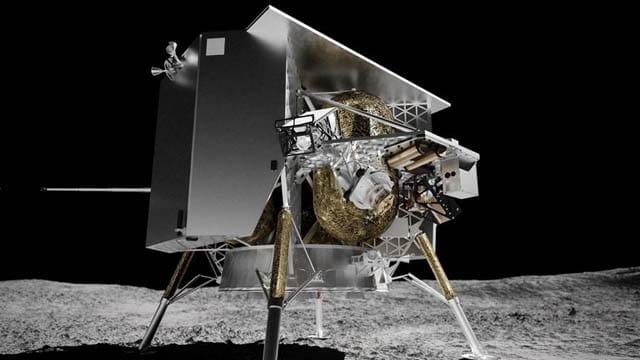
A Rocky Landing, but a Giant Leap for Private Space
The mission’s slightly awkward landing has become a talking point, with some comparing it to a toddler taking their first steps—wobbly, but ultimately triumphant. The spacecraft’s tilt, while not ideal, has not prevented it from carrying out its primary objectives. Engineers and scientists involved in the mission have emphasized that the landing was still a remarkable achievement, especially given the complexities of navigating the Moon’s uneven and poorly understood south pole region.
This mission marks the first time a privately-funded spacecraft has landed near the lunar south pole, an area that has long fascinated scientists and explorers. The region’s permanently shadowed craters are believed to harbor water ice, which could be a game-changer for future lunar exploration and even serve as a resource for producing fuel and sustaining human life. The fact that a private company has now reached this elusive destination is a testament to the growing capabilities of the commercial space sector.

Why the South Pole?
The Moon’s south pole is one of the most challenging—and intriguing—places to land a spacecraft. Its terrain is riddled with deep craters and steep slopes, and the lighting conditions are extreme, with some areas bathed in perpetual sunlight while others remain in eternal darkness. These factors make landing there a high-risk, high-reward endeavor. The awkward touchdown of this mission highlights just how difficult it is to operate in such an environment, even for experienced teams.
Despite the challenges, the south pole is a prime target for exploration. Scientists believe that the water ice trapped in its craters could provide critical resources for future missions, including drinking water, oxygen, and hydrogen for rocket fuel. By successfully landing in this region, the private spacecraft has opened the door to further exploration and potential resource utilization, paving the way for both scientific discovery and commercial opportunities.
A Mix of Celebration and Humor
The mission’s awkward landing has sparked a mix of celebration and lighthearted humor within the space community. Social media has been abuzz with memes and jokes about the spacecraft’s tilted position, with some comparing it to a moon rover that’s “just taking a nap” or a lunar lander that’s “leaning into the challenge.” Even the mission team has embraced the humor, with one engineer reportedly quipping, “We didn’t land perfectly, but we landed perfectly enough.”
This lighthearted response underscores an important truth: space exploration is hard. Even the most meticulously planned missions can encounter unexpected challenges, and the ability to adapt and persevere is what ultimately defines success. The fact that the spacecraft is still functioning and gathering data is a testament to the resilience and ingenuity of the team behind it.
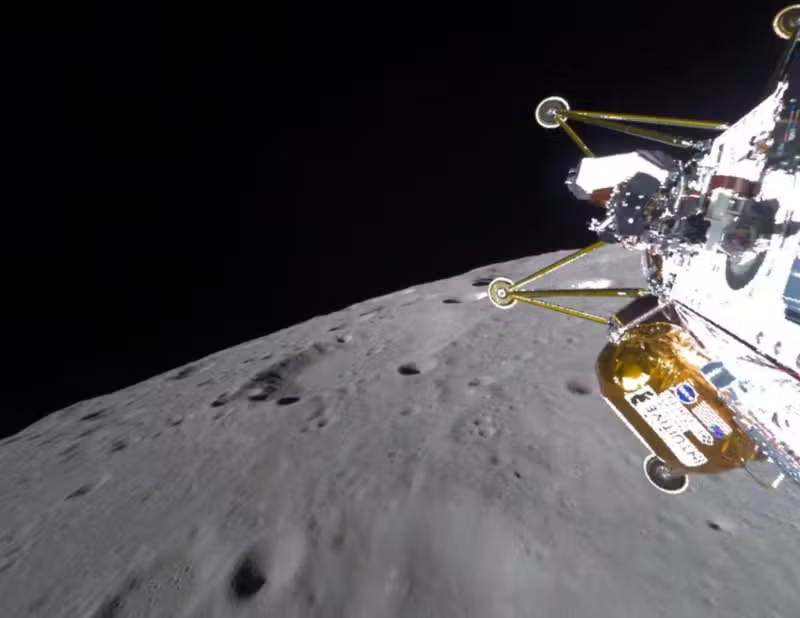
What’s Next for Private Lunar Exploration?
While this mission may have had its awkward moments, it represents a significant step forward for private space exploration. The success of a privately-funded spacecraft landing near the Moon’s south pole demonstrates that commercial companies are capable of tackling some of the most challenging aspects of space exploration. It also highlights the potential for private enterprises to play a key role in future lunar missions, whether as partners to government space agencies or as independent explorers.

Looking ahead, this mission could pave the way for more ambitious endeavors, including the establishment of lunar bases, the extraction of resources, and even the development of a lunar economy. The awkward landing may have been a stumble, but it’s a stumble in the right direction—one that brings humanity closer to a future where the Moon is not just a destination, but a thriving hub of activity.
Conclusion
The private U.S. spaceship’s landing near the Moon’s south pole may have been a little awkward, but it was undeniably historic. It proves that private companies are capable of reaching some of the most challenging destinations in space, even if the journey isn’t always smooth. As the space industry continues to evolve, missions like this one remind us that progress often comes with a few bumps—or tilts—along the way. And sometimes, those awkward moments are what make the story truly unforgettable.