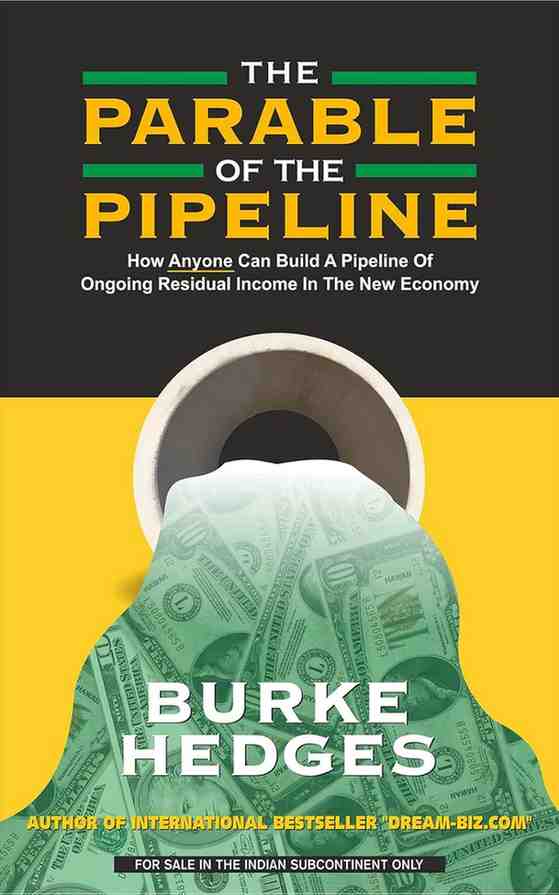
The book uses a story about two villagers, Pablo and Bruno, hired to transport water from a river to their town. Both start by carrying water in buckets daily, earning wages for their labor. Bruno continues this routine, believing steady work guarantees security. Pablo, however, devotes his spare time to building a pipeline to automate water delivery, despite reduced income and ridicule.
Over time, Bruno’s earnings stay tied to his daily labor, leaving him exhausted and vulnerable to setbacks. Pablo’s pipeline, once completed, delivers water continuously without his direct effort, providing lasting income and freedom.
The parable contrasts two approaches to income:
- Active Income (Buckets): Trading time for money, with earnings stopping when work stops.
- Passive Income (Pipeline): Building systems (investments, businesses, royalties) that generate revenue autonomously.
Key ideas include prioritizing long-term solutions over short-term gains, leveraging time and innovation to create scalable income, and recognizing the risks of relying solely on linear, effort-dependent work. The story emphasizes financial resilience through sustainable strategies rather than temporary effort