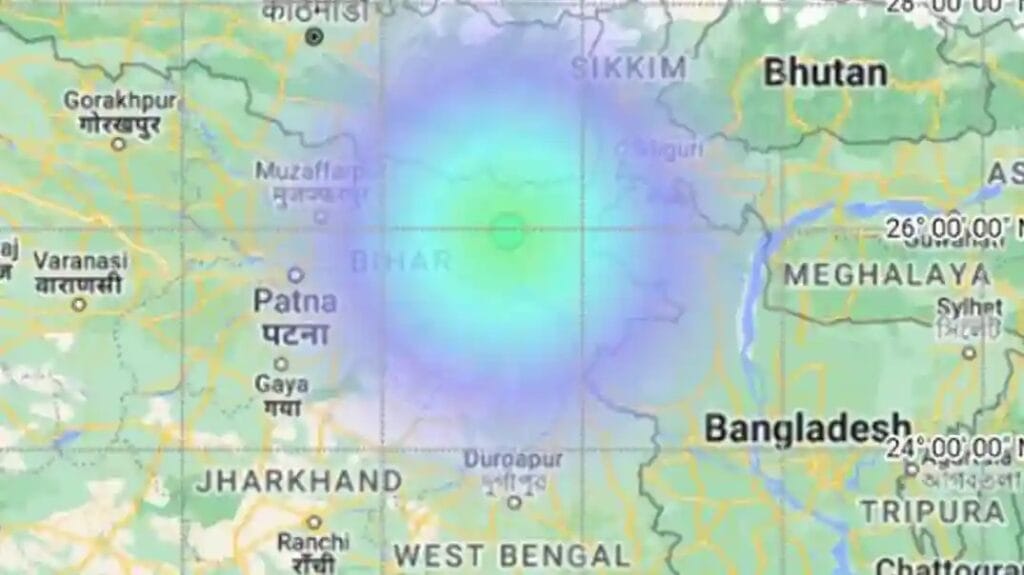
A moderate earthquake with a magnitude of 5.1 struck the Bay of Bengal on 25.02.25, sending tremors across several regions, including Kolkata, West Bengal. The quake, which originated in the Bay of Bengal, was felt in parts of eastern India, causing brief panic among residents but resulting in no immediate reports of damage or casualties.
Details of the Earthquake
According to the Indian Meteorological Department (IMD) and the National Center for Seismology (NCS), the earthquake occurred at approximately 6:10 am IST. The epicenter was located in the Bay of Bengal, about Lat: 19.52 N,Long: 88.55 E, at a depth of 91 kilometers. The tremors were felt across Kolkata, Howrah, Hooghly, and other neighboring districts, lasting for a few seconds.
Residents in high-rise buildings reported swaying furniture and hanging objects, while those on the ground floor felt mild vibrations. Social media was flooded with posts from people sharing their experiences, with many describing the sudden jolt as “unsettling” but brief.
Response and Preparedness
Authorities in Kolkata and surrounding areas quickly reassured the public that there was no cause for alarm. The disaster management teams were put on alert, and emergency services were prepared to respond if needed. The Kolkata Municipal Corporation (KMC) and the West Bengal State Disaster Management Authority (WBSDMA) urged residents to remain calm and follow safety protocols in case of aftershocks.
Earthquakes in the Bay of Bengal are not uncommon, as the region lies in a seismically active zone. The Indian subcontinent is prone to earthquakes due to the tectonic activity caused by the Indian Plate pushing against the Eurasian Plate. While most quakes in this region are of low to moderate intensity, they serve as a reminder of the importance of disaster preparedness.
Seismologists have noted that the Bay of Bengal is part of a complex tectonic system, and earthquakes in this region are typically shallow, making them more noexplained, “The Bay of Bengal is an area of interest for seismologists due to its tectonic activity. While this earthquake was moderate, it highlights the need for continued monitoring and public awareness about earthquake safety.”
Expert Insights
Seismologists have noted that the Bay of Bengal is part of a complex tectonic system, and earthquakes in this region are typically shallow, making them more noticeable even at lower magnitudes. Experts explained, “The Bay of Bengal is an area of interest for seismologists due to its tectonic activity. While this earthquake was moderate, it highlights the need for continued monitoring and public awareness about earthquake safety.
Safety Measures for Residents
In the wake of the earthquake, experts have reiterated the importance of earthquake preparedness. Here are some key safety tips for residents:
- Stay Indoors: If you are inside a building during an earthquake, stay indoors and take cover under a sturdy piece of furniture, such as a table or desk.
- Avoid Elevators: Do not use elevators during or immediately after an earthquake. Use stairs instead.
- Stay Away from Windows: Glass windows and doors can shatter during tremors, so keep a safe distance.
- Have an Emergency Kit: Prepare an emergency kit with essentials like water, non-perishable food, a flashlight, and a first-aid kit.
- Stay Informed: Follow updates from official sources and avoid spreading unverified information.
Conclusion
The 5.1 magnitude earthquake in the Bay of Bengal serves as a reminder of the unpredictable nature of seismic activity. While the tremors caused no significant damage, they underscore the importance of being prepared for such natural events. Authorities and residents alike must remain vigilant and prioritize safety to minimize the impact of future earthquakes. As the region continues to monitor seismic activity, public awareness and preparedness will remain key to ensuring the safety and well-being of all.